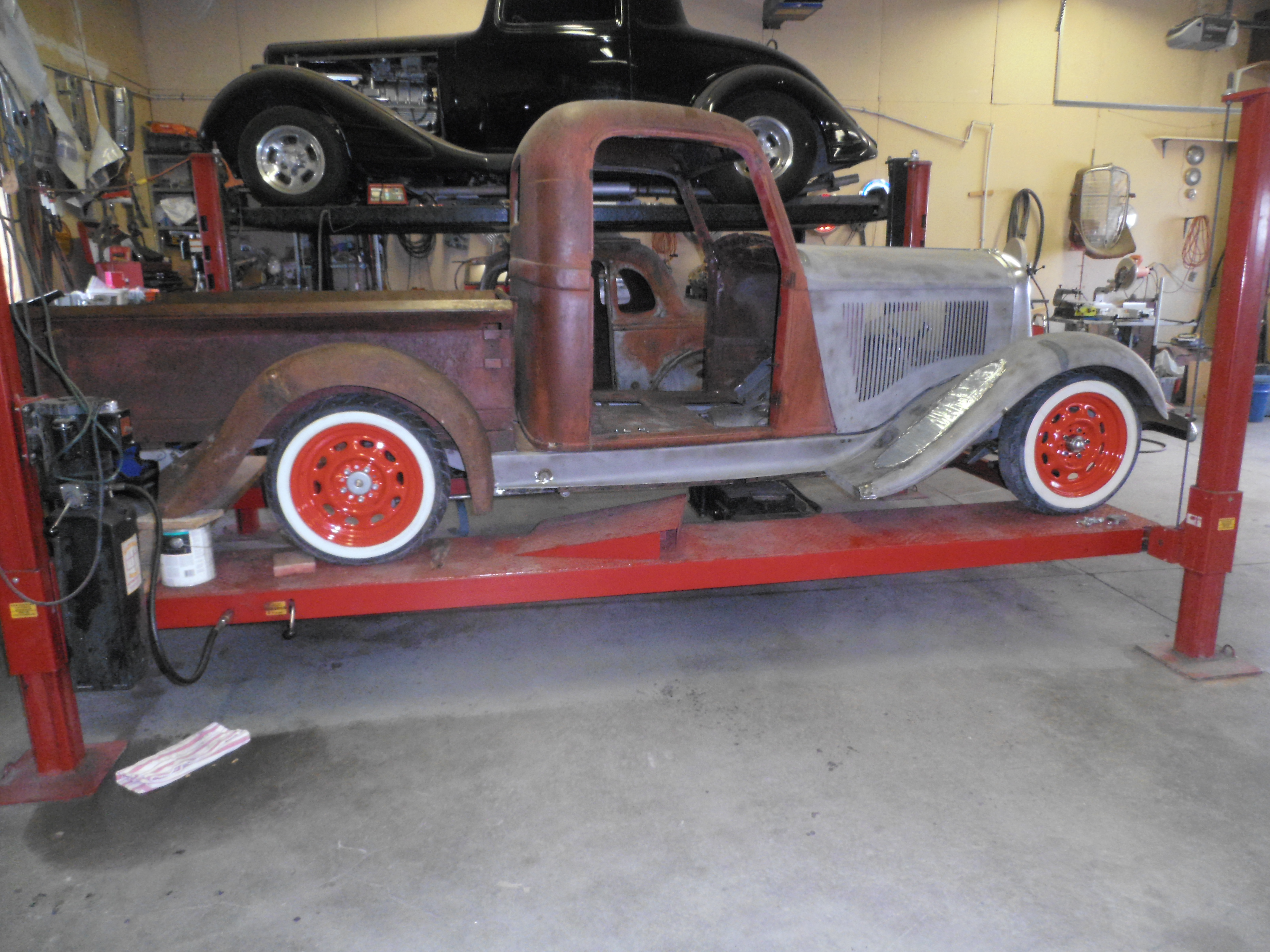
The old ’35 Dodge pickup cab and bed were in pretty rough shape, with many dings and small dents, pin holes, bullet holes, and substantial but mostly surface rust. I’ve already described the sand blasting step. Some guys don’t need that but we did–big time.
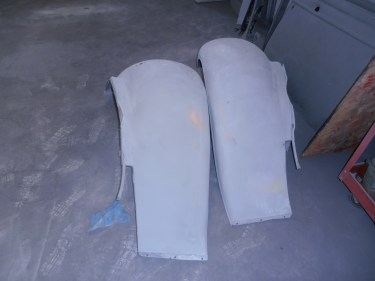
At this point in the early history of my ’35 Dodge pickup project, Ralph’s effort is beginning to show progress. If I’m not too terribly mistaken, I concluded an earlier segment on the fenders. They were beaten and used up at that point. Now, with minor bodywork and panel straightening behind us, and patch panels welded in, it is time for filler.
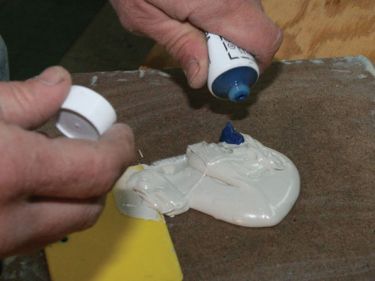
Don’t gasp—this isn’t your old bondo trick. This is a professional step in the process toward a near perfect body from that rusty hulk you have seen earlier.
Bondo is a brand of body filler, but it’s also the generic term for plastic filler that, when uttered, makes many car guys cringe and run. Anyone restoring an old car knows what it’s like to start working on it and find half inch layers of the stuff on damaged bodywork, troweled there by a previous body “sculptor” to get body panels straight quickly.
Let me set those nightmares aside. Using body filler isn’t as evil as you might think. Properly used, bondo is a great thing (and usually mandatory) when finishing sheet metal.
After a good amount of sanding on front fenders, hood, and splash apron, some areas of the panels that still showed low spots get filler.
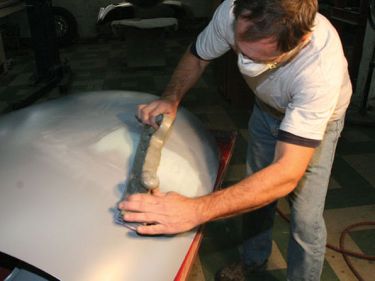
On the application of filler, Ralph just applies it locally to the area needing it. Using a trusty piece of spring steel Ralph evens out the filler to match roughly with the panel’s surface.
After the area had been scuffed by Ralph, the next thing he did was blew off all the sanding dust so the surface would be nice and clean for the filler and filler primer to adhere to.
A straight edge helps assure that no more bondo is used than necessary and that sanding is kept o a minimum.
Here Ralph uses 180-grit sandpaper to finish the surface of the primered metal in preparation for paint. A lot of work has been done to get to this point.
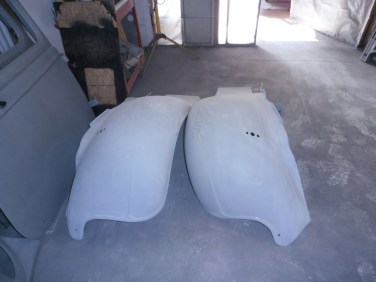
Unwanted holes and welding seems are now history—vanquished from sight. Ralph has labeled the Dodge’s front fenders “180 sanded” so that he knows exactly where he is in the process with respect to each part of the body.
Handles, hinges, locks brackets, etc. that are bolted to any of the panels require their own holes in the sheet metal and nothing can be painted until the proper placement of these parts has been determined.
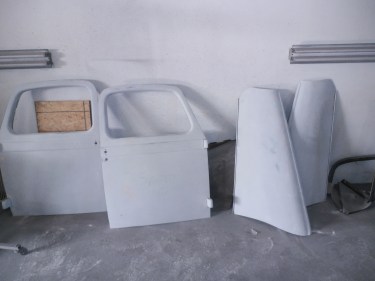
You don’t want to drill a hole through a finished surface. Any welding-in of new metal distorts the area enough that a high-build filler-primer isn’t quite enough—some plastic filler or “bondo” is necessary.
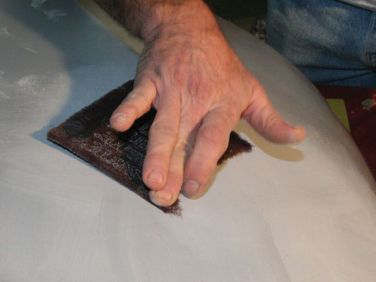
When you run your fingers over a great paint job, you are not only witnessing the efforts of a great painter, but also the person who spent the time block-sanding the vehicle body prior to paint. Sanding by hand and block sanding techniques can be mastered, of course, but the mental willingness to spend hour after hour at this task is not learned but acquired by sheer will power. Ralph does both hand and block sanding.
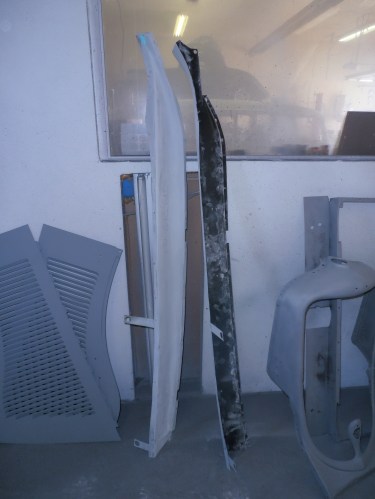
In most cases, you will want to primer the body at least twice before even thinking about applying paint. If flaws are detected in the primered surface, a little spot putty can be applied, sanded smooth, covered with primer, and blocked again. With each successive blocking session, the sandpaper used should become smoother, moving up to 400-grit before the painting stage. These parts are now looking good and set aside for more trial fitting, hardware, and almost at the very end–painting.
If my hot rod pickup were slated to be a smoothie street rod for show, I would want to block and prime at least once more. Well, it is and it isn’t meant for car shows. It will be a driver and also an occasional show car. Ralph will go to a high number sand paper grit before spraying the paint. And after that, we might just need some of that modern wrap over the top of the finished paint. That will keep the paint looking good while driving along old Highway 66!
 Don Holsinger--an old guy's street rod
bullet holes???
LikeLike