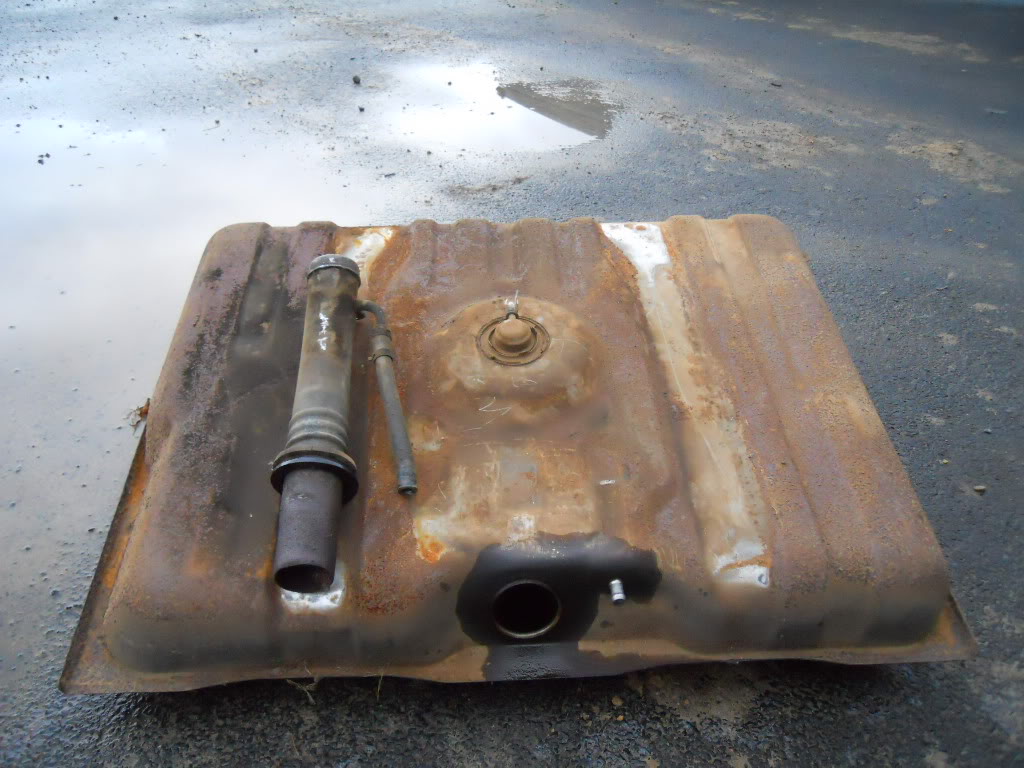
There is a long list of considerations when turning an ordinary vintage pickup into a custom classic truck. Some are cosmetic, others are for performance, and there are often safety issues as well. In the case of our 35 Dodge pickup, all three are factors.
If we had chosen to keep things 100% original, a true restoration, we wouldn’t think about installing a custom fuel tank. But once you start modifying things, as we have in this build, then a custom fuel tank starts moving up on your list of priorities.
A typical fuel tank on a classic truck is just a large, unchambered reservoir and the harder you drive the car the more the fuel moves inside the tank. Make a hard right turn, and inertia causes the fuel to move left. Accelerate hard, and as the car lunges forward inertia causes the fuel to move backwards.
Most vintage vehicles couldn’t accelerate hard and were incapable of taking turns at high speeds without rolling over. Their brakes were inadequate for high gravitational force stops. You get the point; the fuel tanks could be simple without consequences. Model A Fords had gravity fed fuel tanks eliminating the need for a fuel pump.
Controlling fuel slosh inside the tank isn’t overly critical with a carburetor like we have on the Hemi engine because some fuel is stored in the carburetor’s fuel bowl. The bowl typically stores enough fuel that inertia inside the tank doesn’t become much of a problem for regular driving.
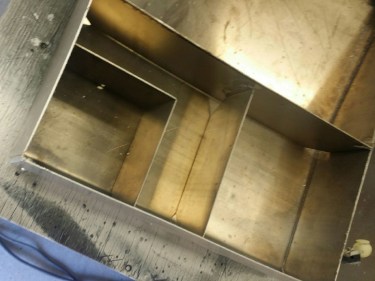
Still the best idea for our carbureted hemi engine is to control the slosh through baffles built inside the tank. The old Dodge will be quite a thirsty ride with that engine and will need a constant fuel supply at a precise pressure. Even though driven by an old codger and in gentlemanly fashion, it will still generate movement in every direction not anticipated by the original tank design and location.
Baffles inside the fuel tank help keep the pickup point for the fuel pump submerged in fuel so that the fuel pump is constantly pumping fuel to the engine. If the fuel is pulled away from the pickup during acceleration or hard cornering, the pump begins to pull in air. Our main goal was to keep as much fuel as possible in the part of the tank where the fuel pump is located.
Where to locate the new tank is still another important question. No question that it had to relocated from its original position inside the cab, under the seat. But where? In the end there were only two choices. First was ahead of the rear end and the second choice was just behind it
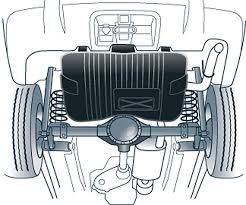
As you can imagine, fuel tanks come in thousands of different shapes and sizes, but Ralph had one on hand that was leftover from a different project. It is a custom made aluminum tank with internal baffles to keep the fuel where it needs to be. On close inspection we saw that the space just ahead of the rear axle would be needed for mufflers and the drive shaft.
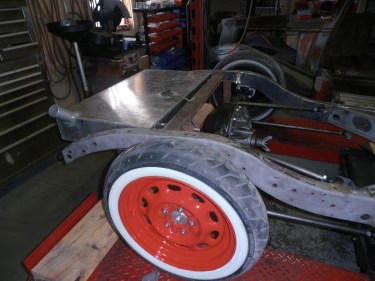
The decision was made to locate the new gas tank behind the rear end at the extreme rearward portion of the vehicle. We will protect it with a stout bumper and the bed will be sitting on top of it for protection from above. A lot of plumbing and a strong fuel pump will be required to move the gas forward up to the engine compartment.
We’re gassed.


Another “fun” and informative page, Don. You *are* a gas!
I just returned from Salt Lake in a very “stout” snow storm! John Taylor took me as a guest to a Utah Westerners dinner meeting (at the Alta Club, no less!). They are mostly old geezers (like us) interested in Utah History. They meet monthly for dinner and a speaker. It was informative and a very good chicken dinner. Good people, although a significant part are not active LDS…per the bar for the first hour! Anyway, the point was to tell you that Winter is giving up it’s reign with great resistance. Incidentally, we rode in John’s Mini…a great little car.
Another interesting note: In my mailbox yesterday was a flyer – announcing the “launch of Rob Avery’s debut novel, *Close Hauled”*. Very nicely done in full color, but only giving the address and date. You guessed it – 2160 Oakcrest Ln! Realizing after just a little looking-up that this is Emily & David’s home, I called to say thanks, but had to leave a message.
So this Friday I will be in their home for what I expect to be an interesting evening! I’ll report.
Owen
On Tue, Feb 21, 2017 at 10:04 PM, Don Holsinger–an old guy’s street rod wrote:
> Don Holsinger posted: “There is a long list of considerations when turning > an ordinary vintage pickup into a custom classic truck. Some are cosmetic, > others are for performance, and there are often safety issues as well. In > the case of our 35 Dodge pickup, all three are factors” >
LikeLike
Okay, somehow I’ve made it to this point in life with hardly a moment’s contemplation as to the issues associated with the gas tank. I guess it’s just not one of those things that tops the list of features.
Actually we’re seriously considering Chrysler’s all-new Pacifica hybrid, with an all EV mode for the first 30 or so miles. I was studying the underlying schematics before reading this latest installment. I am surprised the gas tank you’re using for the truck is aluminum. Maybe that’s how they all are now, but I guess I just would have thought they’d be made of steel?
Also I don’t quite understand how a carburetor works. Do you take requests?
Love
Taylor
LikeLike