
Since you have already seen the engine in my project Dodge pickup, I thought I should tell you a little more about it. Even before the truck was totally torn down the engine was being built. Taking this step early in the project life cycle was by design. Having the engine available for use in planning, all subsequent steps were assessed and retained or modified. As we will subsequently see, having the engine available for early trial fittings is crucial. Will it fit between the hood sides? The hemi engines, even this smaller or “baby” example from Dodge are very wide. We knew it would be close but it does fit. Will it fit between the firewall and the radiator? You might think from a quick glance at the long hood of the truck and the fact that a comparatively long six-cylinder engine originally occupied the space that the V8 would have no trouble fitting in that way, but it didn’t. In the end, we were forced to recess the firewall. Knowing how much power the engine produces is crucial in making other decisions about gear ratios and cooling.
 When I was back in the visualizing stage, I considered many options for the power plant. Almost anything would work. There were several options that would have provided more power for less money and were naturally tempting. But this pickup is a Dodge and, as it turns out, Dodge, a division of Chrysler, made its own small (241 and 270 cubic inch) version of the famous “hemi” engine. The orange one shown in the header is big one. Mine looks the same just in three-quarter scale.
The original hemi engines back in the 50’s and 60’s were designed for power. The big Chrysler 392 or 426 hemi shown in its orange and black racing livery was the engine everyone lusted after when I was young and acquiring hot rod culture. It obviously made an impression on me that lasts until now.
Engineers achieved this by creating a novel combustion chamber, hemispherical in shape. This allowed larger valves and better breathing for the engine—easier to get the explosive air/fuel mixture in and the burned gases out. They achieved this by creating a huge head for the engine block, much wider than the typical engine.
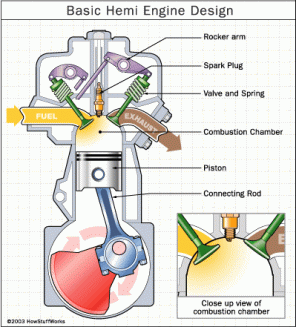
The result was a more powerful engine but one that weighed more and took up more room up front. Hot rodders loved the engines. They not only were powerful but they looked cool—just right when shoe horned in an old car. When I was only 17, I owned a 1932 Ford with a hemi engine.
So I decided it had to be a Dodge hemi for this Dodge pickup. Where to find one? They have become scarce and pricey. They are difficult and expensive to rebuild. And when you are finished they don’t produce as much power as do many, more modern, V8 engines especially from Chevrolet or Ford. But I wanted a Dodge engine for my Dodge so the search was on.
Fortunately, there is one company in the land that devotes its entire existence to the V8 hemi engine. It is Hot Heads located in North Carolina. Not only do they have all parts necessary to rebuild the old engines (pricey) but they also maintain a website where devotees of the engine can buy, sell and exchange old parts. That was where I found an old, used up but complete, Dodge 270 hemi V8 engine. The so-called Baby Hemi for its overall shrunken size.

The engine was finally located–for sale in the classified section of the Hot Heads website. Following a period of negotiation with the seller in Ohio, I purchased the engine. The seller agreed to take the whole dirty, greasy mess to a nearby premium engine rebuilder by the name of Jeff Fowler.

Fowler Performance Engines is a high custom race engine shop. They don’t take on many engines that are intended for street rods and use exclusively away from racing venues. But they were close by and themselves hot rodders at heart and couldn’t resist the chance to rebuild a hemi engine. I told Jeff to build it the way he would if it were for himself.
How difficult is it to rebuild a hemi engine? Well you can see for yourself. This short video shows the whole process in five minutes. https://www.facebook.com/HellsGateHotRods
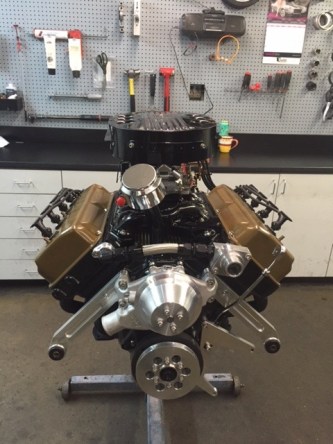 In the end I have a visually stunning, better ‘n new Dodge engine. I wish I had a dummy engine, too, made out of foam, that Ralph could use for dozens of trial fits. He has to be so careful using this one and it is so heavy! But it was all I could do to get this far. How powerful is this engine? Maybe 225 to 250 horsepower. Not much you say and you’d be right. But then, yeah, it’s a hemi!
Although it’s not mine, the good folks at Hagerty have posted a “first run” video of the 331 Chrysler hemi that they built. Fun to watch. Have a look here.


Dad, these are so great. Keep it up!
Sent from my iPhone
>
LikeLike