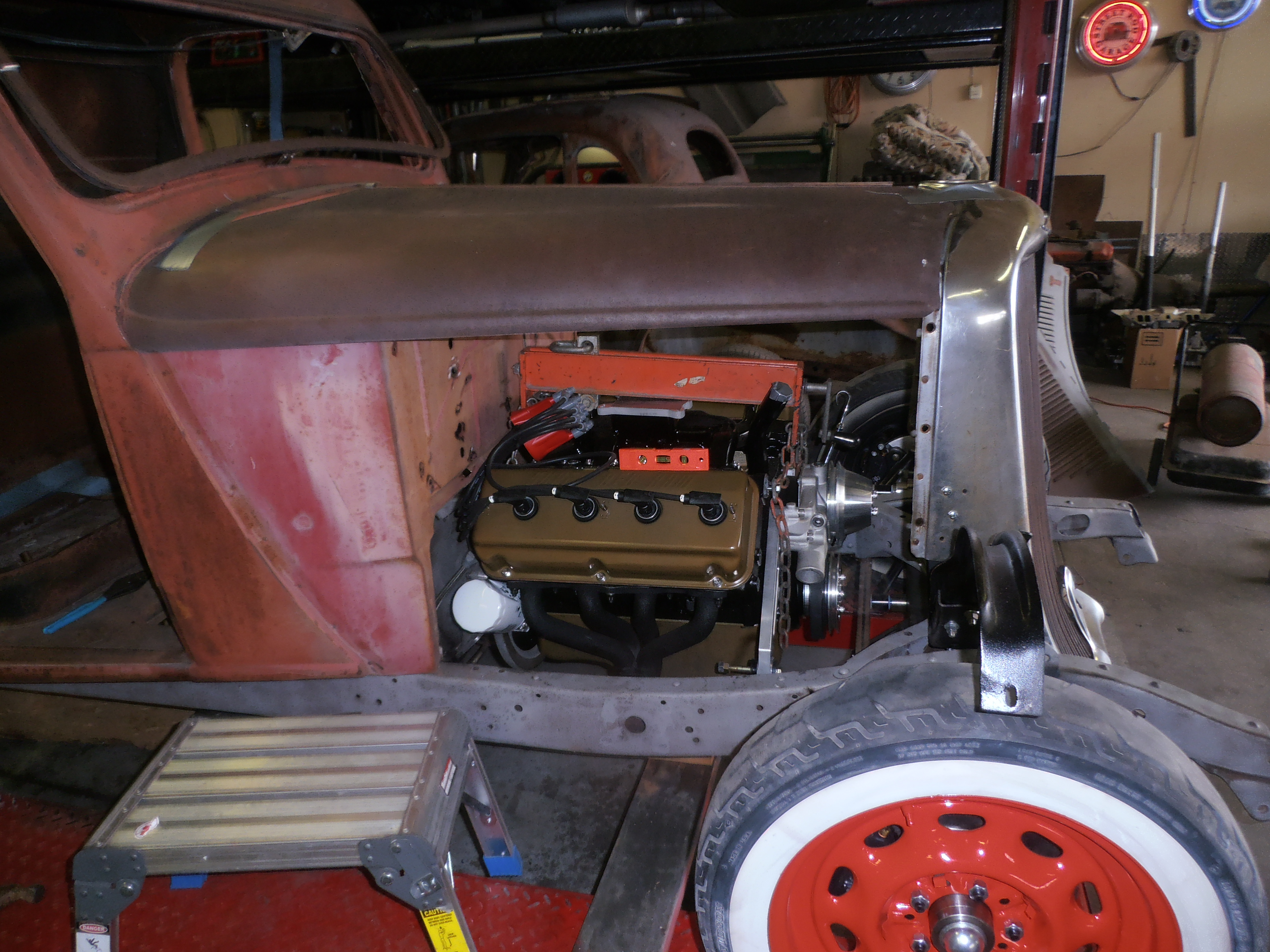
While installing an engine and transmission into an old Dodge pickup where it didn’t originally belong isn’t rocket science by any means, it is done with great care and respect for certain laws of physics and the known technology of hot rodding. We want the engine to look good, mounted securely, align with critical body parts, high enough to keep the oil pan from hitting the pavement, low enough to fit under the hood, back enough to allow for a radiator fan, forward enough to clear the firewall. In short, this is a long, painstaking job.
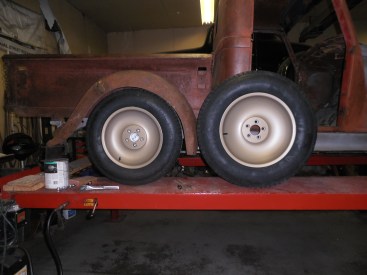
Any carbureted engine like my little hemi should be mounted with the carburetor base level. But level with what? Level with the ground at ride height, which means Ralph had to set the vehicle up at its intended ride height with the final wheels and tires (more about that later) and level it side to side before even starting to mount the engine. The front-to-rear rake must be taken this into account when preparing the frame. I wanted the traditional “street rod” stance, higher in the rear and lower in the front. When the wheels and tires arrived we were eager to get them mounted on the new suspension. That would show us how the pickup will stand.
Initially, we planned for 18” wheels in the rear and 16” on the front axle. But with the really tall tires on those big 18” wheels, we discovered that this combination would not fit under the rear fender. This is rather hard to know beforehand. But we quickly moved to ordering 16” wheels all around and running taller tires in the back to achieve the same effect.
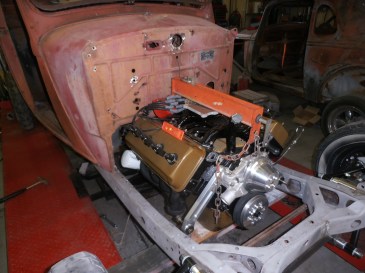
Once all this preparatory work was done, Ralph was finally ready to drop the engine in place and start working out where the mounts must be welded in place. The baby Hemi 270 engine going in the ’35 pickup fortuitously had a flat-bottomed oil pan and was narrower across the valve covers than I thought. Ralph bolted the transmission to the block and lowered the whole thing down on the frame and under the firewall. With the correct motor and transmission mounts in place, Ralph got the carb base level in both directions.
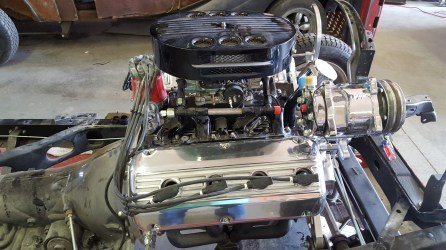
Other factors came into play at this point, such as making sure there was ample room to fit a fan between the engine and radiator. We didn’t have the custom-made aluminum radiator, fan, and shroud from the manufacturer at that point so some estimates were necessary.
We noticed that there was tight clearance between the rear of the driver-side cylinder head and the firewall–
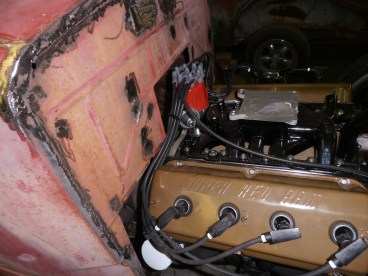
–and insufficient clearance between the left front fender and the right side engine valve cover.
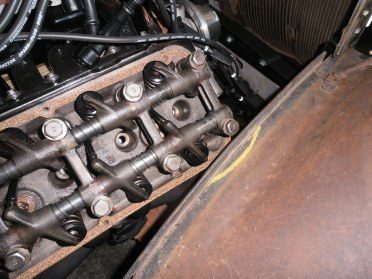
As I stated at the beginning of this posting, such an installation isn’t the most complicated fabrication job in the world, but it’s easy to get the measurements, angles, and geometry wrong and many backyard street rods do prove that they are super fun even if they don’t handle well and are inherently dangerous. I think we’re good with this one and it should ride and handle like a modern car. And this chiefly due to Ralph’s many years of professional experience. Now the fun part comes when trying to route the exhaust headers and steering through the same space. But we have a plan for that.
 Don Holsinger--an old guy's street rod